
Why cultivation as a framework for painting?
Painting is organised around cultivated plants because cultivation offers more than a subject. It provides a way of understanding how painting develops over time.
In cultivation, no season begins independently. Each return inherits conditions established by those before it. The paintings develop through a comparable temporal structure. Over time, the series acquires its own internal history, where earlier paintings continue to influence those that follow.
The research began with Cleidi Hearn's experience of cultivation in rural Brazil, where cultivated plants formed part of everyday life. Their recurring rhythms offered an understanding of time that later became the organising principle of the practice. Although this is its point of departure, the enquiry is not limited to a particular geography.
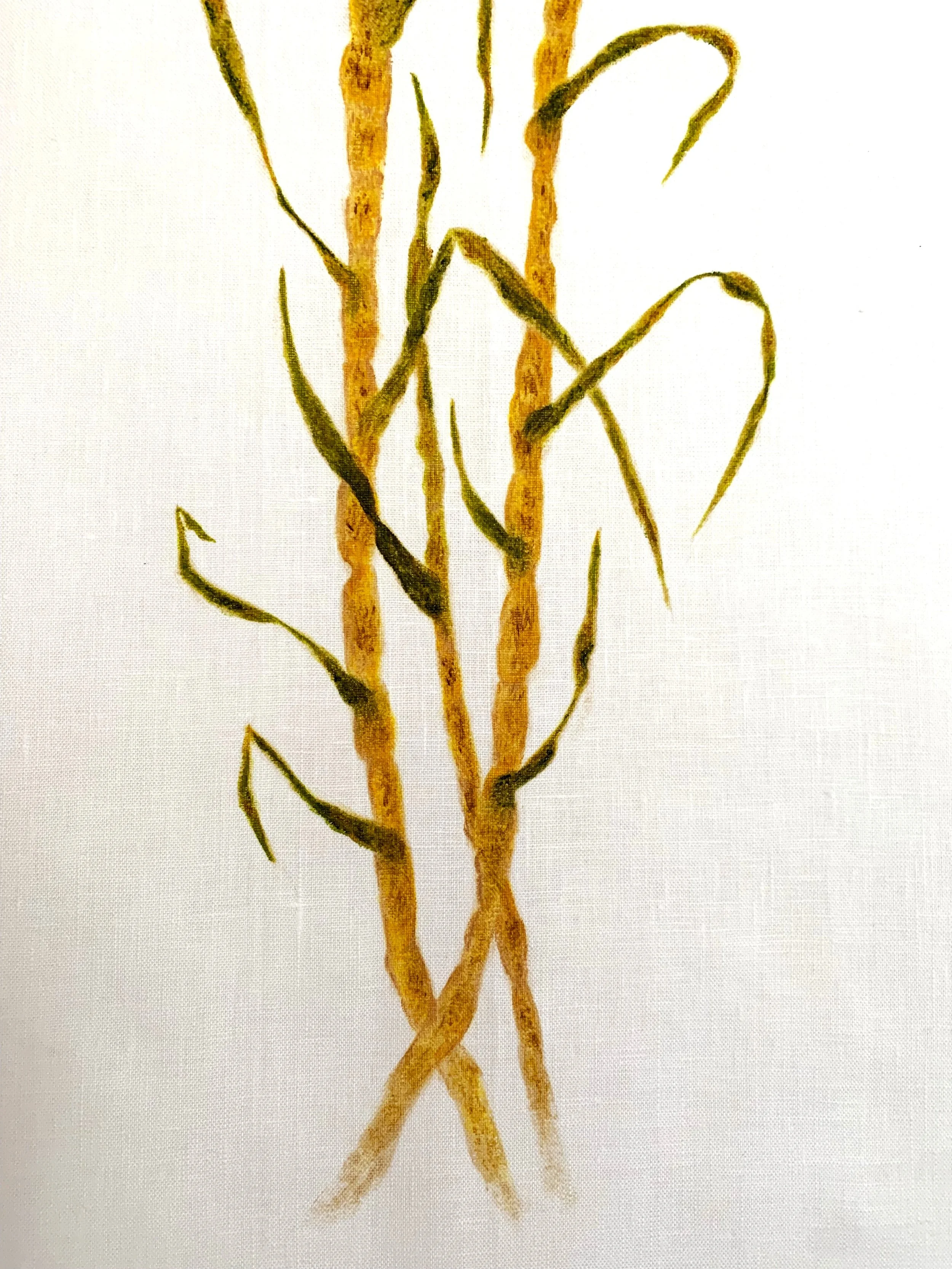
Linen, woven from flax, introduces another cultivated material into the work. Each painting is made on unprimed linen, one of painting's oldest supports. Pigment settles directly into the fibres, allowing the material to remain visibly present as successive layers gradually accumulate. Instead of separating image from support, painting and linen develop together progressively.
Painting provides the conditions for this enquiry because change remains materially present within the work. Earlier layers continue to shape later ones without disappearing, allowing the painting to retain the history of its own making.
The logic of cultivation did not precede the work. It emerged gradually through the act of painting itself, through experimentation, revision and sustained return to the same cultivated plants.
The practice unfolds through long-term series. Each series establishes its own field of enquiry, returning repeatedly to particular cultivated plants so that painting can continue developing through sustained attention and gradual change.
Cleidi Hearn is a Brazilian-born artist living and working in Ireland.